
01IMPACT · THE CHALLENGE
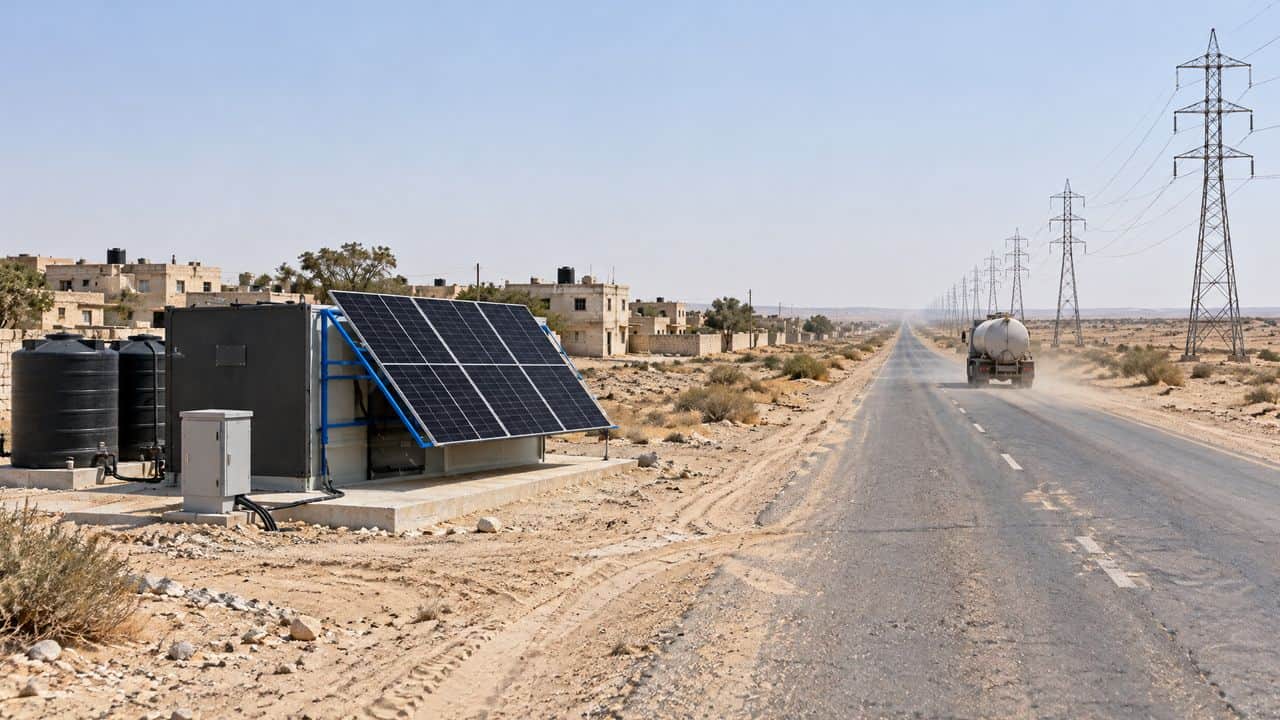
Forty kilometers of line to reach one village, and the bill never stops.
WHAT AN EXTENSION DEMANDS
Long-distance centralized infrastructure
- Transmission lines and distribution corridors over tens of kilometers
- Intermediate substations and booster stations
- High engineering, logistics and terrain-access costs
- Transmission losses of 10 to 25 percent
- Remote metering integration and billing
- Continuous maintenance across exposed infrastructure
WHAT IT COSTS TO RUN
Operating costs in centralized systems
- Diesel for power generation
- Potable water transported from central plants
- Pumping stations and sewer lift systems
- Central wastewater treatment plants
- Heavy maintenance, depreciation and labor
- Grid losses of 10 to 25 percent and theft
12-20M USD12-20M USD
TO EXTEND 40 km OF UTILITIES
800-1,500 USD800-1,500 USD
PER km, PER YEAR, TO MAINTAIN
10-25%10-25%
TRANSMISSION LOSSES
02DECENTRALIZED, LOCAL, MODULAR
At the village edge, with no more than a kilometer of new line.
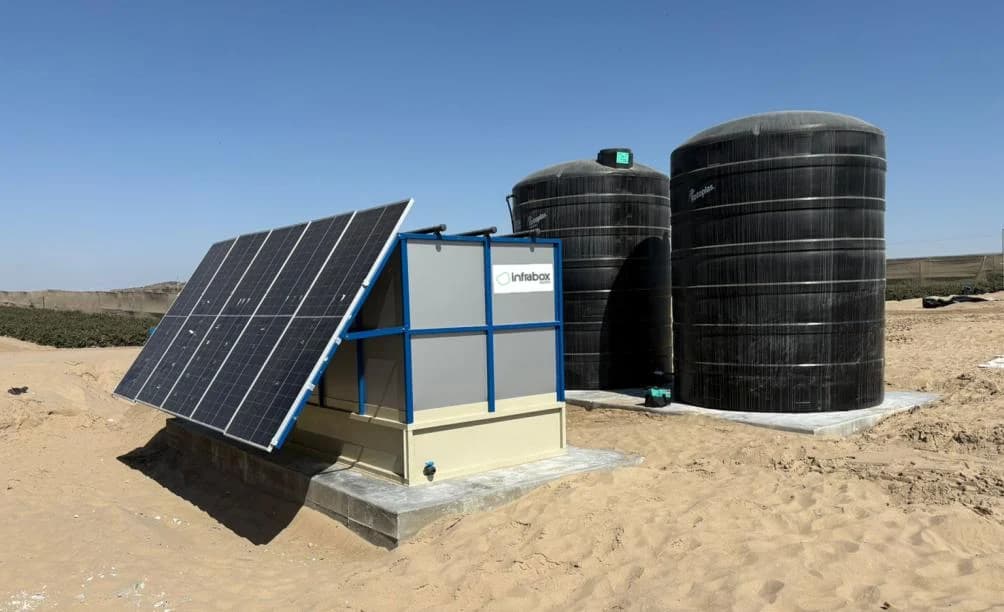
INFRABOX deploys directly at the village edge using standard container modules, requiring no more than 1 km of new grid or pipe extensions and enabling deployment within 4 to 5 months. This reduces capital costs by 30 to 50 percent compared to long-distance centralized extensions.
WHAT THE VILLAGE PRODUCES
ELECTRICITY
Solar, wind and storage, with near-zero transmission losses.
WATER
About 250,000 liters of water and wastewater treated a day, reused for agriculture.
INTERNET
Local Wi-Fi with satellite backhaul: education, telemedicine, commerce, government services.
AGRICULTURE
Controlled-environment greenhouses for year-round produce.
30-50%30-50%
LOWER CAPEX
1 km1 km
MAXIMUM NEW GRID OR PIPE
4-54-5
MONTHS TO DEPLOY
12 YR12 YR
AVERAGE PAYBACK
03SAVINGS AS DEPLOYMENT SCALES
Ten villages save up to 100 million dollars. A thousand save up to ten billion.
10 VILLAGES
50-100M USD
100 VILLAGES
0.5-1.0B USD
1,000 VILLAGES
5-10B USD
CUMULATIVE SAVINGS AGAINST LONG-DISTANCE CENTRALIZED INFRASTRUCTURE.
Traditional long-distance infrastructure costs 15 to 20 million dollars per village. INFRABOX costs 7 to 10 million. The difference, 5 to 10 million dollars per village, stays in the national budget: less sovereign debt, more for manufacturing, agriculture, education and jobs.
WHAT EACH VILLAGE GETS
- Electricity from solar, wind and storage
- About 250,000 liters of water and wastewater treated a day
- Internet by local Wi-Fi with satellite backhaul
- Year-round greenhouse produce
04ECONOMIC RESILIENCE
Local infrastructure is a defense against supply-shock inflation.
Inflation often arrives from the supply side: an energy spike, fuel that doubles in a season, a port that closes, a currency that slides. Raising interest rates punishes the local economy without touching the cause.
The structural answer is infrastructure that does not depend on the shock: energy, water and sewage produced where they are used, with food, connectivity and construction handled the same way. A neighborhood that runs on its own utilities pays no freight, no foreign exchange and no queue for a distant grid.
DECOUPLED FROM GLOBAL SHOCKS
Localized production removes the dependence on international shipping, geopolitical disruption and foreign exchange swings.
AN ESTIMATED 25 PERCENT LOWER COST
Neighborhood-scale modular infrastructure carries none of the bureaucratic overhead, the maintenance burden and the resource losses of centralized mega-projects.
PRICES THAT HOLD
Independent basic utilities shield households from cascading utility and commodity price rises, a durable defense for the cost of living.
Economic stability needs investment to move from blunt monetary fixes to structural infrastructure autonomy. Decentralization is an ecological choice and an economic defense at once.